

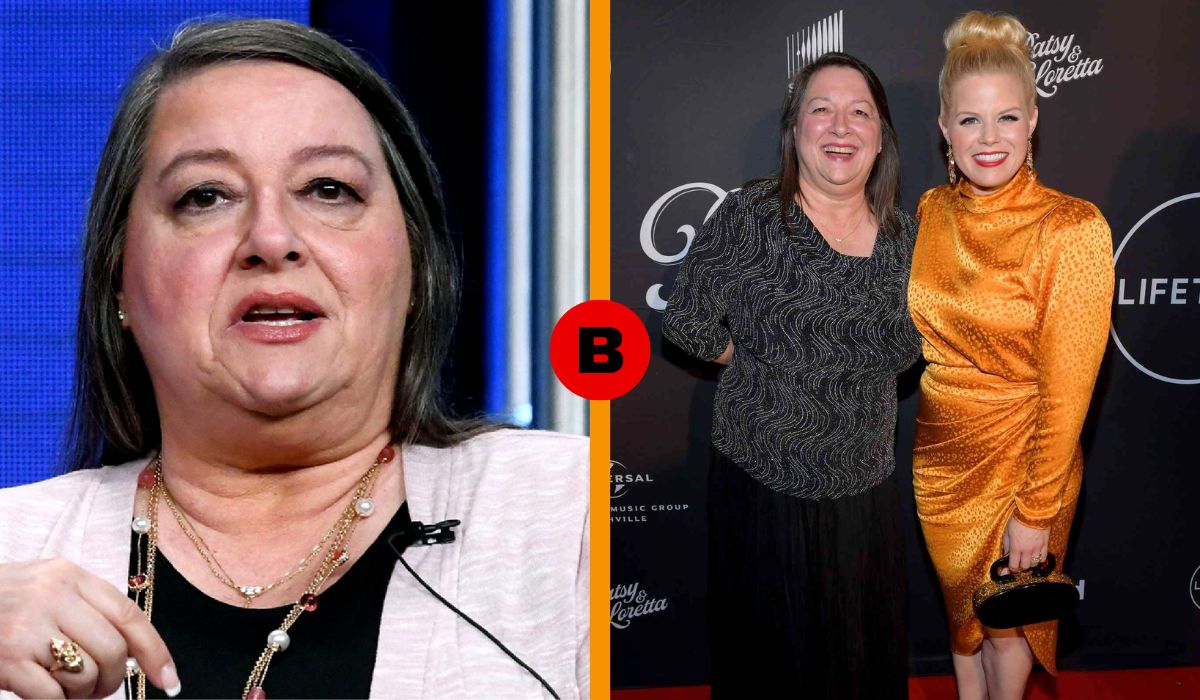
Julie Dick, better known today as Julie Fudge, has a place in country music history that is both deeply personal and historically important. She is the daughter of legendary singer Patsy Cline and Charlie Dick, but her life story goes far beyond being the child of a famous performer.
Julie was only about four years old when Patsy Cline died in a plane crash in 1963. Because she lost her mother so young, much of what she later came to understand about Patsy was pieced together from family stories, photographs, handwritten letters, recordings, personal belongings, museum collections, and conversations with people who had known her.
Over the years, Julie has also become actively involved in protecting and sharing her mother’s legacy. She has contributed to historical programs, interviews, film and television projects, museum activities, and major musical tributes. Rather than trying to follow Patsy Cline into a singing career, Julie chose a different path: helping audiences understand the woman behind one of country music’s most recognizable voices.
Her story offers a rare and valuable perspective on Patsy Cline’s family, motherhood, children, and enduring influence on country music.
Quick Bio Information
| Quick Bio | Information |
|---|---|
| Name | Julie Dick |
| Also Known As | Julie Fudge |
| Born | August 1958 |
| Nationality | American |
| Known For | Daughter Of Patsy Cline |
| Mother | Patsy Cline |
| Father | Charlie Dick |
| Brother | Randy Dick |
| Brother’s Full Name | Allen Randolph Dick |
| Mother’s Profession | Country Music Singer |
| Mother Died | March 5, 1963 |
| Age When Mother Died | About Four Years Old |
| Public Role | Preserving Patsy Cline’s Legacy |
| Music Connection | Patsy Cline Family Heritage |
| Museum Connection | Patsy Cline Museum |
| Television Work | Producer And Legacy Contributor |
| 2024 Project | Patsy Cline: Walkin’ After Midnight |
| Lifestyle | Largely Private |
The Country Music Hall of Fame records that Patsy Cline gave birth to Julie in August 1958 and to her son Randy in January 1961.
Who Is Julie Dick?
Julie Dick is the daughter of Patsy Cline and Charlie Dick. In more recent interviews, television credits, museum material, and public appearances, she is often identified as Julie Fudge.
That difference in names can sometimes confuse readers searching for information about her, but both names refer to the same person.
The Country Music Hall of Fame preserves a 1961 family photograph showing Patsy with Julie Dick and Randy Dick, firmly placing both children within Cline’s documented family history.
Julie never pursued the type of public career her mother had. Instead, most of her public involvement has centered on preserving Patsy Cline’s life, music, and personal story.
That gives Julie a distinctive role. She is not only Patsy Cline’s daughter but also one of the people who can offer first-hand family context about a woman who became larger than life in American music.
Julie Dick’s Early Life
Julie was born in August 1958, less than a year after Patsy Cline married Charlie Dick in September 1957. At the time, Patsy was already performing professionally, although many of the career milestones that would make her famous were still ahead.
The family later welcomed Julie’s younger brother, Allen Randolph “Randy” Dick, in January 1961.
Julie’s earliest years therefore unfolded during one of the most important periods of her mother’s career. Patsy was recording, touring, and becoming an increasingly recognizable figure within the Nashville Sound.
Songs such as “I Fall to Pieces,” “Crazy,” and “She’s Got You” helped establish Cline as one of the most distinctive singers of her era. Yet behind the success was a young mother raising two small children.
That contrast between public fame and private family life would become especially meaningful to Julie later in life.
Growing Up As Patsy Cline’s Daughter
For Julie, Patsy Cline was not initially the legendary figure that music fans know today. She was simply her mother.
As Julie grew older, however, she began to understand just how unusual her family history was. Patsy’s reputation continued to expand long after her death, and new generations of listeners discovered the emotional power of her recordings.
The Country Music Hall of Fame has described Cline as a benchmark against which many female vocalists have been measured. Her style helped bridge country and popular music and influenced singers across several generations.
Julie therefore grew up balancing two very different versions of the same person.
To the public, Patsy Cline was a music icon. To Julie, she was a mother whose memory was preserved through a small number of childhood experiences and the stories of people who knew her personally.
That tension between private memory and public legend is one of the most compelling parts of Julie Dick’s story.
Julie Was Four When Patsy Cline Died
Julie Dick’s childhood changed forever on March 5, 1963.
Patsy Cline was returning from a benefit performance in Kansas City when the small plane carrying her crashed near Camden, Tennessee. Patsy died at the age of 30 along with Cowboy Copas, Hawkshaw Hawkins, and pilot Randy Hughes.
Julie was about four years old.
Because she was so young, she had only a limited collection of direct memories of her mother. In later years, photographs, family conversations, letters, and stories from people who knew Patsy became especially important.
That helps explain why historical material carries such personal meaning for Julie.
A fan might look at an old photograph and see a piece of country music history. Julie can look at the same image and see part of a family story she did not have enough time to fully experience herself.
Julie Dick And Her Brother Randy
Julie and her younger brother, Randy Dick, were Patsy Cline’s two children.
Randy was born in January 1961, making him only about two years old when their mother died. Both children therefore grew up without the chance to know Patsy through adulthood.
Public information about Julie and Randy’s private relationship is limited, and much of their family life has remained outside the spotlight. That privacy is worth respecting.
What is well documented is that both children remain important parts of Patsy Cline’s family history.
Their father, Charlie Dick, lived for more than five decades after Patsy’s death and also played a role in preserving her memory through interviews, documentaries, and public appearances.
Julie later became the more visible of the two children in museum programs, historical discussions, television productions, and other projects connected with Patsy’s legacy.
How Julie Learned More About Her Mother
Since Julie’s direct memories of Patsy were limited, other people and historical materials became essential in helping her understand who her mother had been.
Family members, musicians, friends, colleagues, photographs, recordings, letters, and personal objects all helped fill in gaps that childhood memories alone could not.
One important example came in 2012, when Julie participated in a Country Music Hall of Fame and Museum panel dedicated to Patsy Cline’s songs, life, and legacy.
Julie appeared alongside her father Charlie Dick, musician Harold Bradley, George Hamilton IV, and Jan Howard. During the discussion, she spoke about family memories, including how Patsy and Julie’s grandmother, Hilda Hensley, worked together on stage clothing.
Moments like these show how Julie’s relationship with her mother’s history developed gradually.
She was not simply reading a biography written by strangers. She was hearing stories from people who had worked with Patsy, lived around her, and understood parts of her personality that never appeared on stage.
What Julie Has Said About Patsy As A Mother
Some of Julie’s most valuable contributions to Patsy Cline’s biography concern the singer’s private life as a parent.
In a 2019 interview, Julie described Patsy as a “hands-on mom.” She explained that her mother loved music but also treated performing as work that helped support the household.
Julie has also said she believed Patsy would often have preferred to be home with her family rather than traveling.
That perspective adds an important human dimension to Cline’s public image.
Most fans encounter Patsy through polished recordings, glamorous photographs, or stories about her influence on country music. Julie’s comments reveal a different side: a young working mother trying to balance career demands with two small children.
This family perspective makes Patsy Cline’s story more complete.
She was not only an extraordinary singer. She was also a woman dealing with the same pull between work and home that many families understand today.
Why Julie Dick Did Not Become A Singer
One of the most common questions about Julie Dick is whether she followed her mother into music.
She did not become a professional singer.
Julie has explained in past interviews that having the ability to sing is only one part of building a career in music. Performing professionally requires determination, travel, discipline, and a real willingness to live that lifestyle.
She did not feel the same calling her mother had.
That decision is worth noting because it shows that Julie never needed to copy Patsy’s career in order to remain connected to her legacy.
Instead, she found her own role.
Over time, Julie became involved in preserving her mother’s story, contributing to historical projects, and helping filmmakers, museums, and audiences better understand Patsy as both an artist and a person.
In that sense, her path has been different from her mother’s but still closely tied to music history.
The Patsy Cline Museum And Julie Dick
The Patsy Cline Museum in Nashville offers fans a closer look at both Cline’s career and her personal world.
Created by Bill Miller, the museum opened in downtown Nashville in 2017. Its collection has included costumes, photographs, documents, personal belongings, and other objects connected with Patsy’s life.
For Julie, these materials have a meaning that goes well beyond ordinary memorabilia.
She has spoken about how much she values letters and small personal items because they help her piece together the larger story of her mother’s life.
That idea explains why the museum holds such emotional significance for her.
Fans can visit to learn more about a famous singer. Julie can encounter evidence of the woman she lost as a child.
The museum therefore serves two purposes at once: it preserves a major chapter in country music history while also safeguarding pieces of one family’s personal past.
Why Patsy Cline’s Letters Matter To Julie
Handwritten letters often reveal details that public appearances and official biographies cannot.
They show how someone spoke when they weren’t performing, what they cared about, how they communicated with others, and what occupied their attention in everyday life.
For Julie Dick, Patsy Cline’s surviving letters offer another way to understand the mother she barely had time to know.
Julie has said she enjoys reading letters and discovering small details because each one can add another piece to the larger picture.
That makes the archive valuable on a deeply personal level.
A music researcher may examine a letter for dates or career information. A fan may treasure the handwriting. Julie, however, can read it as part of her own family history.
This also shows why careful archival preservation matters.
Sometimes the smallest items tell us more about a person than an award, a chart position, or a famous photograph ever could.
Julie Dick’s Role In Preserving Patsy Cline’s Legacy
Julie has not simply watched her mother’s fame continue from a distance.
She has taken part in museum programs, interviews, documentaries, historical discussions, television productions, and tribute projects.
Her involvement provides something researchers and filmmakers cannot easily recreate: family context.
Julie also participated in the 2019 Lifetime film Patsy & Loretta, which focused on the friendship between Patsy Cline and Loretta Lynn.
While discussing the production, Julie offered insight into Patsy’s motherhood and the emotional difficulty of leaving her children when work required travel.
That kind of contribution matters because popular entertainment can easily reduce famous people to familiar stereotypes.
Julie’s involvement helps keep the story grounded in family memory and documented history.
Rather than presenting Patsy only as a tragic star with a remarkable voice, her daughter has repeatedly helped audiences see a more complete person.
The 2024 Patsy Cline Tribute
Julie’s work preserving her mother’s legacy has continued into recent years.
PBS aired Patsy Cline: Walkin’ After Midnight on November 22, 2024, as part of Great Performances. The program was filmed at Nashville’s historic Ryman Auditorium and featured performers including Wynonna Judd, Ashley McBryde, Kristin Chenoweth, Mickey Guyton, Pat Benatar and Neil Giraldo, Rita Wilson, and others.
Most importantly for Julie Dick’s biography, PBS officially credited Julie D. Fudge and Charles A. Dick Jr. as Co-Executive Producers.
That credit is significant.
It shows that Julie’s contribution to her mother’s legacy goes well beyond appearing in occasional interviews or attending commemorative events.
She has taken part directly in major professional productions designed to introduce Patsy Cline’s music to audiences who may have been born decades after the singer’s death.
The tribute also shows how strongly Patsy’s music continues to resonate with artists from different generations and musical backgrounds.
Patsy Cline’s Country Music Legacy
Julie’s work becomes easier to understand when viewed against the scale of Patsy Cline’s influence.
Patsy was inducted into the Country Music Hall of Fame in 1973, ten years after her death. She became the first female solo performer elected to the Hall.
That date is important because some older secondary websites have incorrectly listed other years for her induction.
Although Patsy’s career was relatively brief, the recordings she left behind became enduring parts of American music.
Songs such as “Crazy,” “I Fall to Pieces,” “She’s Got You,” and “Walkin’ After Midnight” continued to reach audiences long after her death.
Her emotional delivery, phrasing, and ability to move between country and pop styles influenced generations of singers.
For Julie, preserving that history means protecting two things at once.
She is helping preserve the legacy of a major recording artist, but she is also protecting the memory of her own mother.
Julie Dick Today
As of the most reliable public information available through 2026, Julie Fudge remains connected with projects that celebrate and preserve Patsy Cline’s work.
Her role as a co-executive producer of the 2024 PBS tribute is one of the clearest recent examples of that continued involvement.
At the same time, Julie has generally kept much of her personal life away from public attention.
That matters when reading online biographies.
Some websites make highly specific claims about her marriage, children, finances, residence, or net worth without providing reliable evidence. Such details should be treated cautiously unless they can be traced to credible first-hand or authoritative sources.
A responsible Julie Dick biography should make a clear distinction between confirmed public information and speculation.
That approach is not only more respectful of Julie’s privacy; it also makes the article more useful to readers who want accurate information rather than recycled celebrity rumors.
Why Julie Dick’s Story Still Matters
Julie Dick’s story contributes something to Patsy Cline’s history that chart positions, record sales, and awards cannot provide.
Through Julie, audiences can understand Patsy as a mother, daughter, working woman, and family member as well as a groundbreaking singer.
Julie has also shown that preserving a famous parent’s legacy doesn’t require becoming famous in the same way.
She never attempted to recreate Patsy’s music career or build a public identity around performing her mother’s songs.
Instead, she has shared family memories, supported museum and historical projects, contributed to film and television productions, and helped bring context to personal archives.
That quieter contribution has kept Patsy’s story human even as her reputation has grown far beyond what the family could have imagined in 1963.
It is also why interest in Julie continues. Readers are not only curious about Patsy Cline’s daughter. They want to understand what it means to grow up in the shadow of an enormous cultural legacy and then help protect it for future generations.
Final Thoughts
Julie Dick, also known as Julie Fudge, occupies a distinctive place in country music history.
She is Patsy Cline’s daughter, but her story cannot be reduced to that fact alone.
Julie was only about four years old when her mother died. That left her to spend much of her later life learning about Patsy through photographs, family stories, recordings, handwritten letters, personal belongings, museum exhibits, and the memories of people who knew her.
Eventually, Julie became part of the preservation process herself.
Her participation in Country Music Hall of Fame programs, museum projects, Patsy & Loretta, and the 2024 PBS Great Performances tribute has helped ensure that Patsy Cline is remembered as more than a remarkable voice.
Julie’s perspective reminds audiences that behind recordings such as “Crazy” and “I Fall to Pieces” was a young woman with children, responsibilities, ambitions, friendships, and a home life.
That human connection may be Julie Dick’s most important contribution to her mother’s lasting legacy.
FAQs About Julie Dick
Who Is Julie Dick?
Julie Dick, also known publicly as Julie Fudge, is the daughter of country music legend Patsy Cline and Charlie Dick. She is best known today for her involvement in projects that preserve and celebrate her mother’s music, family history, and cultural legacy.
When Was Julie Dick Born?
Julie Dick was born in August 1958. The Country Music Hall of Fame documents her birth as part of Patsy Cline’s family history.
How Old Was Julie Dick When Patsy Cline Died?
Julie was about four years old when Patsy Cline died in a plane crash on March 5, 1963. Because she was so young, many of the details she later learned about her mother came from relatives, friends, photographs, letters, recordings, and historical archives.
Who Is Julie Dick’s Brother?
Julie’s younger brother is Allen Randolph “Randy” Dick, who was born in January 1961. Julie and Randy were the two children of Patsy Cline and Charlie Dick.
Did Julie Dick Become A Singer?
No. Julie did not pursue a professional singing career. She has explained that professional music requires much more than the ability to sing and that she did not feel the same calling toward that lifestyle that her mother had.
What Has Julie Dick Said About Patsy Cline As A Mother?
Julie has described Patsy as a hands-on mother who cared deeply about being with her family. She has also said that although Patsy loved music, performing was work that helped support the household and that she believes her mother often would have preferred to be at home with her children.
Is Julie Dick Involved With Patsy Cline’s Legacy?
Yes. Julie has participated in interviews, museum programs, historical events, screen productions, and major tribute projects. PBS officially credited Julie D. Fudge as a co-executive producer of the 2024 Great Performances special Patsy Cline: Walkin’ After Midnight.
When Was Patsy Cline Inducted Into The Country Music Hall Of Fame?
Patsy Cline was inducted into the Country Music Hall of Fame in 1973, ten years after her death. She became the first female solo performer elected to the Hall.
Learn more and explore exciting content on: Luca Bella Facinelli: Biography, Family, Career and Personal Life