

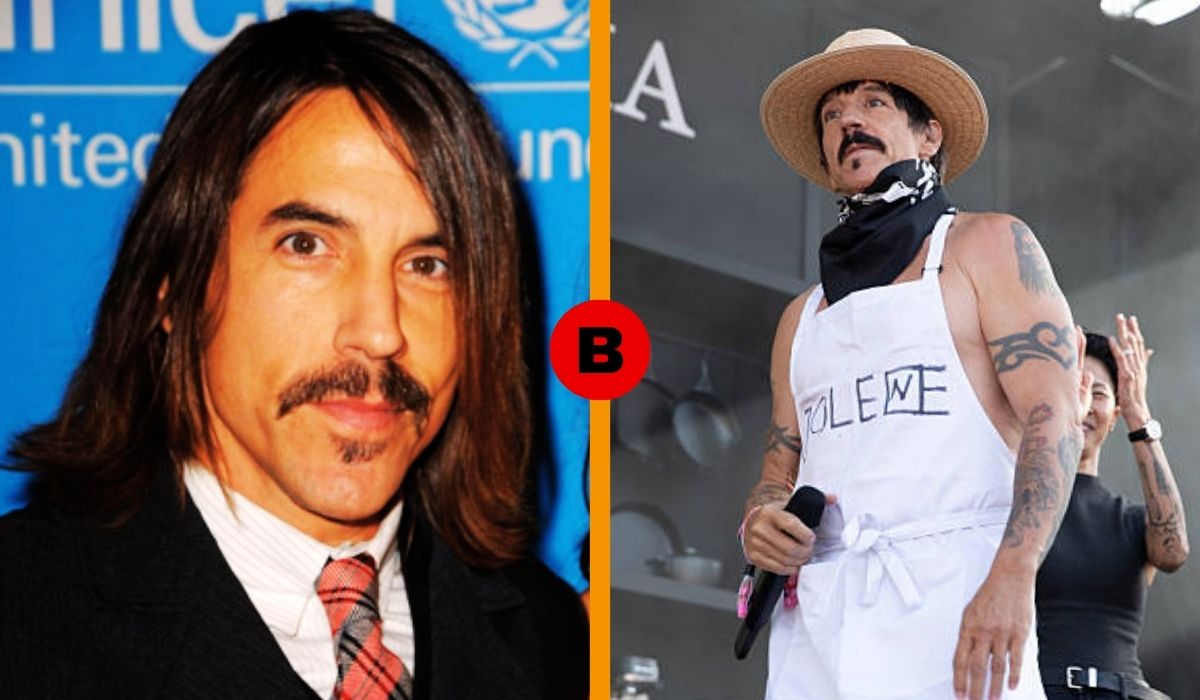
Anthony Kiedis has spent more than four decades at the heart of one of Rock music’s most recognizable bands. As the Lead Singer and Lyricist of the Red Hot Chili Peppers, he helped take an unpredictable Los Angeles club act and turn it into an internationally successful group known for mixing Funk, Punk, Alternative Rock, Rap, and melodic Rock.
His life story, though, is far more complicated than a string of hit albums and packed arenas. It includes an unconventional childhood, a friendship with Flea that has lasted since their school days, devastating personal loss, addiction and recovery, fatherhood, and years of artistic reinvention. Born on November 1, 1962, Kiedis grew from a restless teenager in Los Angeles into one of Alternative Rock’s longest-serving and most distinctive frontmen.
What makes his career especially interesting is the way his personal life and creative work have often overlapped. His lyrics have explored loneliness, love, addiction, California, regret, desire, memory, and personal growth. Combined with his unmistakable stage presence, those themes have made Anthony Kiedis central to the identity of the Red Hot Chili Peppers.
Anthony Kiedis Quick Bio Information
| Quick Bio | Information |
|---|---|
| Full Name | Anthony Kiedis |
| Date Of Birth | November 1, 1962 |
| Age In 2026 | 63 Years Old |
| Birthplace | Grand Rapids, Michigan, United States |
| Nationality | American |
| Profession | Singer, Songwriter, Musician, And Occasional Actor |
| Famous For | Lead Vocalist Of Red Hot Chili Peppers |
| Music Genres | Alternative Rock, Funk Rock, Punk Rock, And Rap Rock |
| Band | Red Hot Chili Peppers |
| Band Formed | 1983 |
| Longtime Bandmate | Flea |
| Father | John Michael Kiedis, Known As Blackie Dammett |
| Mother | Margaret “Peggy” Noble/Idema |
| Child | Everly Bear Kiedis |
| Son’s Birth Date | October 2, 2007 |
| Son’s Mother | Heather Christie |
| Memoir | Scar Tissue |
| Rock Hall Induction | 2012 With Red Hot Chili Peppers |
| Height | About 5 Feet 9 Inches (1.75 M) |
Anthony Kiedis’s Early Life And Childhood
Anthony Kiedis was born in Grand Rapids, Michigan, to John Michael Kiedis and Margaret Noble. His parents separated when he was still young, and his early life was shaped by two very different environments. He spent part of his childhood with his mother in Michigan before eventually moving to Los Angeles to live with his father.
John Kiedis, who used the professional name Blackie Dammett, worked as an actor and lived a lifestyle closely connected with Hollywood. For Anthony, that meant early exposure to musicians, actors, nightlife, and adult situations that were far removed from an ordinary teenage experience. Many of those memories later appeared in his memoir, Scar Tissue, where he described both the excitement and instability of those years.
Kiedis attended Fairfax High School in Los Angeles and was academically capable despite an increasingly adventurous personal life. Some older online biographies have claimed that he graduated from a UCLA music program, but that description is misleading. Kiedis did attend UCLA for a time, yet his path into music did not come through completing a traditional university music degree.
Instead, his real education as a performer took place in rehearsal rooms, clubs, friendships, and the wider Los Angeles music scene. He learned by experimenting, watching other musicians, writing lyrics, and performing in front of live audiences. That unconventional background would later become part of what made his style so difficult to categorize.
How Anthony Kiedis Met Flea
One of the most important relationships in Anthony Kiedis’s life began at Fairfax High School, where he met Michael Balzary, better known as Flea. Their friendship would eventually become the foundation of Red Hot Chili Peppers.
The two connected quickly. Both were energetic, curious, irreverent, and drawn to the creative side of Los Angeles. Flea was developing into an unusually talented bassist, while Kiedis was beginning to discover that his sense of rhythm and instinct for words could work naturally in front of a band.
Their friendship has since survived the kinds of pressures that end many creative partnerships. Over the years, they have dealt with lineup changes, personal disagreements, addiction, the deaths of friends, worldwide fame, grueling tours, and repeated shifts in the music industry.
Through it all, Kiedis and Flea remained central to the Red Hot Chili Peppers story. What began as a teenage friendship grew into one of the longest-running creative relationships in Alternative Rock, giving the band a sense of continuity even when other members came and went.
The Formation Of Red Hot Chili Peppers
Red Hot Chili Peppers grew out of a group of friends connected to the Los Angeles music scene. Anthony Kiedis, Flea, guitarist Hillel Slovak, and drummer Jack Irons formed the early creative circle from which the band emerged in 1983.
From the start, they sounded unlike most conventional Rock groups. Funk bass lines collided with Punk aggression, Rock guitar, and Kiedis’s rapid, rhythm-heavy vocal delivery. Their live shows were physical, chaotic, and often deliberately provocative.
Kiedis was not originally known as a traditional melodic singer. His early strengths were different. He had timing, personality, wordplay, and the ability to place his vocals tightly around Flea’s bass patterns. His performance style was almost percussive, relying as much on rhythm as melody.
That combination became a defining feature of the early Red Hot Chili Peppers. Over time, the band’s mixture of Funk, Punk, Rock, Rap, and Psychedelic Pop developed into a sound that was both difficult to classify and instantly recognizable.
The Red Hot Chili Peppers did not become global stars overnight. Their early career included lineup changes, uneven commercial results, and years of building a following through live shows. Yet the unusual chemistry at the center of the band kept pushing them forward.
Hillel Slovak’s Death And A Major Turning Point
Guitarist Hillel Slovak was far more than a bandmate to Anthony Kiedis. He was a close friend and one of the musicians who helped shape Kiedis’s early understanding of music, creativity, and band life.
Slovak died from a heroin overdose in June 1988 at the age of 26. His death devastated the people around him and became one of the darkest moments in the history of Red Hot Chili Peppers.
For Kiedis, the loss carried an especially painful weight because he was also struggling with substance use. Slovak’s death forced him to confront the dangers of the lifestyle surrounding the band and his own addiction.
Drummer Jack Irons left the group after Slovak’s death, and the future of Red Hot Chili Peppers suddenly looked uncertain. Kiedis and Flea, however, decided to continue. The band eventually brought in guitarist John Frusciante and drummer Chad Smith, creating a lineup that would later become its most famous.
Slovak’s death remained an emotional landmark in Kiedis’s life, but it would be inaccurate to treat every later song about loneliness, drugs, or loss as a direct response to that single event. Kiedis’s writing drew from a broader collection of experiences involving addiction, relationships, isolation, recovery, friendship, and life in Los Angeles.
Blood Sugar Sex Magik And Worldwide Success
The major breakthrough came with Blood Sugar Sex Magik in 1991. Produced by Rick Rubin, the album preserved the band’s explosive Funk energy while introducing greater melodic depth and emotional range.
“Give It Away” captured the Red Hot Chili Peppers at their most energetic. The song was rhythmic, strange, playful, and unmistakably connected to the group’s Funk-Rock roots. “Under The Bridge,” by contrast, revealed a side of Anthony Kiedis that many listeners had never heard.
The success of the album changed the band’s place in popular music. Suddenly, Red Hot Chili Peppers were no longer simply an unusual Los Angeles act with a loyal following. They were reaching mainstream radio, larger audiences, and listeners around the world.
For Kiedis personally, Blood Sugar Sex Magik was equally important. It showed that he could do more than deliver fast, rhythm-driven vocals. He could sing melodies, expose personal emotions, and write lyrics that connected with people who knew nothing about the Los Angeles club scene from which the band had emerged.
That realization opened new creative possibilities. The frontman who had once relied heavily on rhythmic phrasing was beginning to develop into a more versatile singer and increasingly introspective songwriter.
The Real Meaning Behind Under The Bridge
“Under The Bridge” remains one of the songs most strongly associated with Anthony Kiedis, largely because it revealed a level of vulnerability that had not previously been central to the Red Hot Chili Peppers image.
The lyrics came from feelings of loneliness, isolation, past drug use, and Kiedis’s complicated emotional relationship with Los Angeles. In the song, the city almost becomes a companion. It represents familiarity and belonging, but also distance and alienation.
Kiedis initially wrote the words as personal writing rather than as a typical Chili Peppers song. Rick Rubin recognized that the material could become something more, and the band eventually developed music around it.
The result was striking because it sounded so different from much of the group’s earlier work. Kiedis sang with greater restraint, the arrangement gave the lyrics room to breathe, and the emotional tone was far more exposed.
Its success helped broaden the public’s understanding of what Red Hot Chili Peppers could be. It also created space for later reflective songs such as “Scar Tissue” and “Otherside.”
The song is sometimes oversimplified as being directly about Hillel Slovak’s death. That interpretation misses much of its meaning. “Under The Bridge” is more broadly about addiction, memory, loneliness, disconnection, and the search for a sense of belonging.
Anthony Kiedis’s Songwriting Style And Lyrics
Anthony Kiedis’s work as a lyricist is one of the biggest reasons Red Hot Chili Peppers have maintained such a recognizable identity across different musical eras.
Much of his writing comes from personal experience, although he often reshapes those experiences into fragmented images and unusual phrases. California appears repeatedly in his lyrics, but so do love, sex, addiction, recovery, friendship, grief, regret, memory, and aging.
His approach changed noticeably as his career progressed. Early Chili Peppers songs often emphasized speed, humor, provocative language, and rhythmic wordplay. Later material allowed more reflection and emotional vulnerability.
Tracks such as “Scar Tissue,” “Otherside,” “Californication,” “By The Way,” and “Dani California” demonstrate the range of that development. Some songs are highly personal, while others mix real experiences with imagined characters, surreal images, or loosely connected memories.
Kiedis does not always write like a conventional storyteller. Instead of building every lyric around a clear beginning, middle, and end, he often combines sounds, images, place names, memories, and unexpected phrases.
That method works partly because his lyrics are closely tied to the music. Words are chosen not only for meaning but also for rhythm, movement, and how they sit against Flea’s bass lines, Chad Smith’s drumming, and the band’s guitar arrangements.
Californication, By The Way, And Stadium Arcadium
John Frusciante’s return to Red Hot Chili Peppers in the late 1990s helped launch another major creative period for the band.
The first result was Californication, released in 1999. The album included “Scar Tissue,” “Otherside,” and the title track, all of which showed a more restrained and melodic side of Anthony Kiedis.
The record also marked a shift in the band’s overall sound. Funk remained part of the foundation, but melody, atmosphere, and introspection became increasingly important.
By The Way followed in 2002 and pushed the group even further toward harmony and melodic songwriting. Kiedis sounded more comfortable carrying sustained melodies, while the arrangements became richer and more layered.
Then came Stadium Arcadium in 2006, an ambitious double album that produced songs including “Dani California,” “Snow (Hey Oh),” and “Tell Me Baby.”
Taken together, these albums show how dramatically the band had evolved since its early years. Red Hot Chili Peppers could still deliver Funk-driven energy, but they were no longer limited by it.
Kiedis’s growth was especially noticeable. The performer once known mainly for rapid rhythmic delivery had become comfortable with softer passages, melodic choruses, and more reflective lyrics. His voice was still unmistakably his own, but the range of what he could do with it had expanded.
Addiction, Recovery, And Scar Tissue
Substance addiction is an important part of Anthony Kiedis’s biography, but it should not be treated as the single defining feature of his life.
Kiedis has spoken publicly about drug use beginning when he was young and about repeated periods of addiction and recovery. Those struggles affected his health, friendships, romantic relationships, and professional life at different stages of his career.
His 2004 memoir, Scar Tissue, remains the most detailed first-person account of those experiences. Written in collaboration with Larry Sloman, the book covers Kiedis’s childhood, relationship with his father, drug use, romantic life, friendships, fame, music career, personal losses, and efforts to become sober.
Part of the memoir’s appeal is its candor. Kiedis does not present his early life as clean or orderly. Instead, he describes years marked by impulsive decisions, dangerous behavior, intense relationships, addiction, and repeated attempts to change.
At the same time, a memoir should be understood for what it is: a personal recollection told from the author’s point of view. It is an important primary source for understanding how Kiedis sees his own life, but individual memories are still his perspective rather than independent historical verification.
Even with that distinction, Scar Tissue offers valuable context for listeners who want to understand the experiences behind many of his songs.
Anthony Kiedis’s Relationships And Fatherhood
Romantic relationships have played an important role in Anthony Kiedis’s personal life and have frequently influenced his songwriting.
Over the years, he has been publicly connected with several women, but reducing this part of his biography to a list of former partners would miss the more interesting point. Love, separation, desire, regret, and emotional uncertainty have repeatedly appeared in his lyrics.
One particularly important relationship in his later life was with Heather Christie. Their son, Everly Bear Kiedis, was born on October 2, 2007.
Fatherhood introduced a different kind of responsibility into Kiedis’s life. His earlier adulthood had been shaped by touring, addiction, unstable relationships, and the unpredictable demands of Rock culture. Becoming a parent added a more grounded personal role.
Kiedis has spoken warmly about his relationship with Everly and about the importance of fatherhood in his later life. That shift is significant because it shows another side of a public figure who was once known largely for wild performances and an unconventional lifestyle.
A balanced biography should keep the focus on Kiedis’s development as a father rather than unnecessarily examining the private life of his son.
Anthony Kiedis’s Stage Presence And Acting Work
Anthony Kiedis’s stage presence has always been one of the most recognizable parts of the Red Hot Chili Peppers live experience.
He rarely performs like a stationary vocalist. Instead, he moves constantly, dances in unusual ways, works physically with the rhythm of the songs, and interacts with the audience throughout a performance.
His frequent shirtless appearances also became part of the band’s visual identity, particularly during the years when Red Hot Chili Peppers built their reputation as a fiercely energetic live act.
That physicality fits naturally with Flea’s performance style. Together, the two created a stage dynamic that made the band seem restless even during songs with slower tempos.
Kiedis’s adventurous personality was visible long before he became famous. As a teenager, he suffered a serious injury after misjudging a jump toward a swimming pool, and later accidents also affected parts of his career.
He has made occasional acting appearances as well, something that connects with his childhood exposure to Hollywood through his father. Acting, however, has never become his primary professional identity.
For Kiedis, the stage has always been where performance matters most. His combination of movement, rhythm, personality, and vocal delivery turned him into a frontman whose appeal cannot be measured by conventional singing technique alone.
Anthony Kiedis’s Awards And Rock Hall Recognition
By the time Red Hot Chili Peppers were inducted into the Rock & Roll Hall of Fame in 2012, Anthony Kiedis had already spent nearly three decades helping the band survive dramatic changes.
The induction recognized more than commercial success. It reflected the group’s musical influence, longevity, experimentation, and ability to create a sound that crossed conventional genre boundaries.
Red Hot Chili Peppers became known for bringing Funk, Punk, Rap, Rock, and melodic songwriting together in ways that later became far more common across Alternative music.
For Kiedis, the recognition also highlighted the unusual durability of his career. He had remained at the center of the same band through the deaths of friends, changing guitarists, addiction, disagreements, commercial highs and lows, and major shifts in popular music.
By then, survival itself had become part of the Red Hot Chili Peppers story.
The band’s success across several decades also made Kiedis part of multiple generations of Rock music. He was influenced by earlier artists, emerged during the Alternative explosion, and eventually became an influence on performers who grew up listening to his records.
Anthony Kiedis And The Modern Red Hot Chili Peppers Era
Red Hot Chili Peppers did not simply become a nostalgia act after the albums that established their reputation.
John Frusciante returned to the group again in 2019, reuniting with Anthony Kiedis, Flea, and Chad Smith. The lineup went on to release Unlimited Love and Return Of The Dream Canteen in 2022.
The records showed that the musicians were still interested in creating new material rather than relying entirely on their older catalog.
For Kiedis, the later era offers an especially interesting contrast with his early work. The singer who once wrote from the immediate experience of youth, addiction, romance, and reckless behavior now has decades of memories to draw from.
Age naturally changes perspective. Later lyrics can carry the weight of long relationships, old friendships, places revisited, mistakes reconsidered, and memories seen from a distance.
That does not mean the Red Hot Chili Peppers abandoned the qualities that made them famous. Funk, playful language, unusual rhythms, and energetic performance remain part of the band’s identity.
What has changed is the perspective behind them.
In 2026, Anthony Kiedis’s relevance cannot be judged only by the success of songs recorded in the 1990s or early 2000s. The fact that he has remained the recognizable voice of the same major band for more than four decades is itself a significant achievement.
Anthony Kiedis’s Influence And Musical Legacy
Anthony Kiedis is difficult to evaluate using the same standards applied to traditional Rock vocalists because his influence comes from a combination of qualities rather than technical singing alone.
Rhythm has always been central to his approach. From the earliest Red Hot Chili Peppers records, he treated the voice almost like another percussion instrument, placing words around Funk bass and sharp guitar patterns.
That style helped popularize a form of Rock performance in which Rap-like phrasing, Punk energy, Funk rhythms, and melodic singing could exist within the same band.
His ability to evolve is equally important. Instead of remaining trapped in the style that first made Red Hot Chili Peppers unusual, Kiedis gradually became more melodic, reflective, and emotionally open.
That evolution can be heard clearly when comparing the band’s early material with songs such as “Under The Bridge,” “Scar Tissue,” “Otherside,” and “Californication.”
His lyrical honesty also gave the band depth. Red Hot Chili Peppers were once widely associated with wild behavior, outrageous performances, and Funk-heavy energy. Kiedis’s willingness to write about loneliness, regret, addiction, insecurity, and recovery revealed a more complicated emotional world beneath that image.
Perhaps that contrast is one of the biggest reasons the band endured. Their music could be playful and serious, aggressive and vulnerable, rhythmic and melodic.
Kiedis embodied those contradictions.
Final Thoughts On Anthony Kiedis
Anthony Kiedis’s biography is not a straightforward story of Rock-star success.
He began life in Michigan, moved into an unconventional adolescence in Los Angeles, developed a lifelong creative partnership with Flea, experienced the devastating death of Hillel Slovak, struggled with addiction, achieved worldwide fame, became a father, and continued making music into his sixties.
Through every stage, Red Hot Chili Peppers remained the central creative thread.
One of the most compelling parts of his career is the extent to which he changed without losing the qualities that made him recognizable. The young frontman whose vocals depended heavily on rhythm eventually became the voice behind some of Alternative Rock’s most reflective songs.
His legacy, then, is not built on one album, one song, or one era.
It rests on longevity, resilience, creative evolution, distinctive songwriting, and an ability to remain connected to the same musical partnership for more than four decades.
Anthony Kiedis may always be most closely associated with Red Hot Chili Peppers, but his larger story is about reinvention. It shows how an artist can carry the experiences of youth into later life without simply repeating them, turning personal history into music that continues to reach new listeners.
FAQs About Anthony Kiedis
How Old Is Anthony Kiedis?
Anthony Kiedis was born on November 1, 1962, in Grand Rapids, Michigan. He is 63 years old as of August 2026 and will celebrate his 64th birthday on November 1, 2026.
His age is particularly notable when viewed alongside the length of his career. Kiedis has been involved with Red Hot Chili Peppers since the band’s beginnings in 1983, meaning his professional history now stretches across more than four decades.
Is Anthony Kiedis Still In Red Hot Chili Peppers?
Yes. Anthony Kiedis remains best known as the longtime Lead Vocalist and Lyricist of Red Hot Chili Peppers.
Together with Flea, he has provided the strongest continuity across the band’s history. Although Red Hot Chili Peppers have experienced several lineup changes, Kiedis has remained central to the group’s identity, songwriting, and live performances.
Does Anthony Kiedis Have A Son?
Yes. Anthony Kiedis has one publicly known son, Everly Bear Kiedis, who was born on October 2, 2007. Everly’s mother is Kiedis’s former partner Heather Christie.
Kiedis has spoken positively about fatherhood and the close relationship he shares with his son. Becoming a parent represented a significant personal change after many years shaped by touring, relationships, addiction, and the unpredictable lifestyle associated with his early music career.
What Is Anthony Kiedis’s Most Famous Song?
“Under The Bridge” is widely considered one of the songs most strongly associated with Anthony Kiedis.
Its lyrics explore loneliness, isolation, past drug use, and his emotional connection with Los Angeles. The song was also important because it revealed a softer, more melodic side of Kiedis and helped expand the musical identity of Red Hot Chili Peppers beyond their earlier Funk-heavy sound.
Other major songs closely connected with his songwriting include “Scar Tissue,” “Otherside,” “Californication,” “Give It Away,” and “Dani California.”
Did Anthony Kiedis Write Scar Tissue?
Yes. Scar Tissue is Anthony Kiedis’s 2004 memoir, written in collaboration with author Larry Sloman.
The book covers his childhood, relationship with his father, early exposure to drugs, addiction, romantic relationships, friendships, fame, recovery, and his long career with Red Hot Chili Peppers.
Because it is a memoir, the book reflects Kiedis’s own memories and perspective. Even so, it remains one of the most important first-person sources for understanding his life and the experiences that later influenced his lyrics.
Who Was Anthony Kiedis’s Father?
Anthony Kiedis’s father was John Michael Kiedis, better known professionally as Blackie Dammett.
Dammett worked as an actor and became a major influence on Anthony’s adolescence after his son moved from Michigan to Los Angeles. Life with his father exposed Kiedis to Hollywood culture, musicians, performers, nightlife, and adult experiences at a very young age.
Those years later became an important part of Kiedis’s autobiography and helped shape the unconventional path that led him toward music.
When Did Anthony Kiedis Start Red Hot Chili Peppers?
Anthony Kiedis was part of Red Hot Chili Peppers from the group’s formation in Los Angeles in 1983.
The early creative circle included Kiedis, Flea, Hillel Slovak, and Jack Irons. Their mixture of Funk, Punk, Rock, and rhythm-focused vocals helped establish the sound that would eventually make the group internationally famous.
Although the lineup changed several times, Kiedis and Flea remained at the center of the band.
Is Anthony Kiedis In The Rock And Roll Hall Of Fame?
Yes. Anthony Kiedis was inducted into the Rock & Roll Hall of Fame as a member of Red Hot Chili Peppers in 2012.
The honor recognized the band’s originality, longevity, commercial achievements, and influence on modern Rock and Alternative music. It also marked an important milestone for Kiedis, who had remained with the group through decades of personal challenges, lineup changes, and musical evolution.
Learn more and explore exciting content on: Who Is Philip Anthony Mitchell? Inside the Life and Ministry of the 2819 Church Pastor
[…] Learn more and explore exciting content on: Anthony Kiedis: Inside the Life, Music, Career, and Legacy of the RHCP Frontman […]