

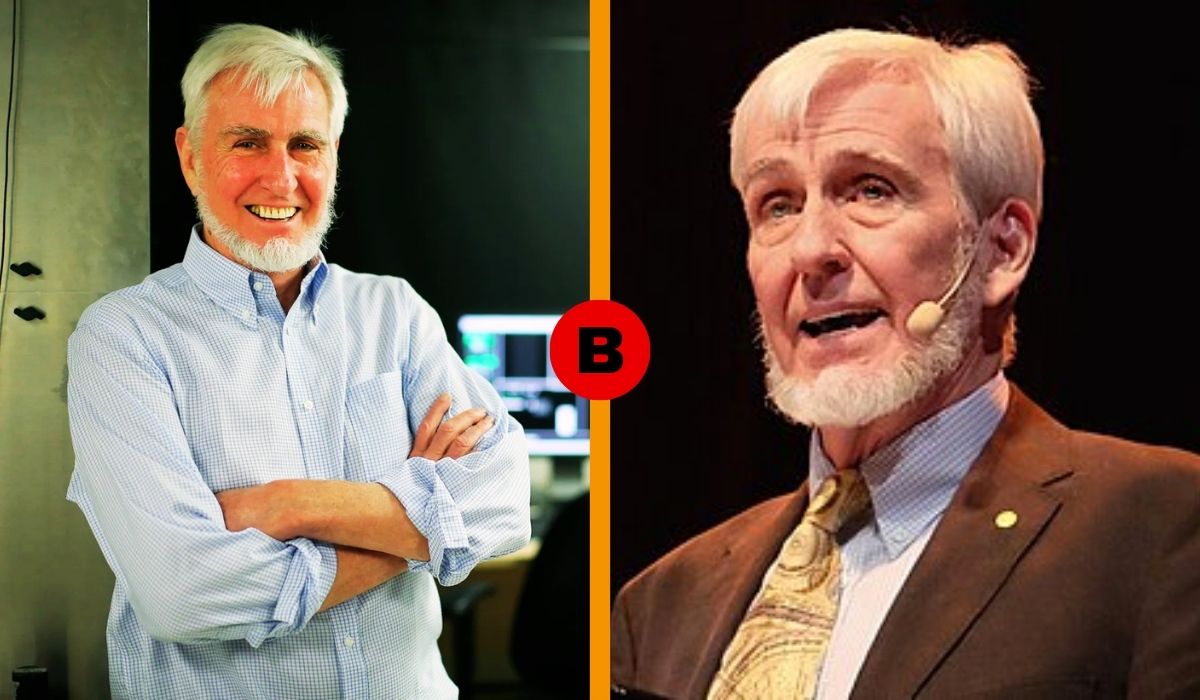
Professor John O’Keefe is one of the scientists who transformed the way we understand the human brain. Decades before GPS became part of everyday life, he was investigating a more fundamental question: how does the brain know where we are?
His research led to the discovery of specialized neurons known as Place Cells, which become active when an animal is in a particular location. That finding provided powerful biological evidence that the brain creates an internal representation of the surrounding world. It also helped establish the idea of a neural Cognitive Map, linking location, memory, and navigation in ways scientists had only theorized about before.
For this pioneering work, Professor John O’Keefe shared the 2014 Nobel Prize in Physiology or Medicine with May-Britt Moser and Edvard I. Moser. His discoveries remain central to modern Neuroscience, especially in research involving the Hippocampus, Spatial Memory, navigation, cognition, and the brain’s internal positioning system.
Quick Bio Information
| Quick Bio | Information |
|---|---|
| Full Name | John O’Keefe |
| Known As | Professor John O’Keefe |
| Born | November 1939 |
| Birthplace | Harlem, New York City, United States |
| Nationality Background | American-born, to Irish immigrant parents |
| Profession | Neuroscientist |
| Main Field | Behavioural And Cognitive Neuroscience |
| Specialist Area | Spatial Memory And Navigation |
| Undergraduate Education | City College of New York |
| Doctoral University | McGill University |
| Doctorate | Physiological Psychology, 1967 |
| Major Institution | University College London |
| Became UCL Professor | 1987 |
| Major Discovery | Place Cells |
| Discovery Year | 1971 |
| Key Brain Region | Hippocampus |
| Nobel Prize | Physiology or Medicine, 2014 |
| Kavli Prize | Neuroscience, 2014 |
| Royal Society Fellowship | Elected 1992 |
| Major Legacy | Discovery of a key component of the Brain’s Inner GPS |
Early Life And Background
Professor John O’Keefe was born in November 1939 in Harlem, New York, and spent much of his childhood in the South Bronx. His parents were Irish immigrants who had moved to the United States during a difficult economic period. Although neither had extensive formal education, they placed a strong value on hard work and learning.
His father worked as a mechanic for New York’s bus system, while his mother worked as a welder in shipyards during the Second World War. O’Keefe attended a local Catholic elementary school before earning a scholarship to Regis High School in Manhattan. Nothing about his childhood suggested an obvious path toward a Nobel Prize, yet his upbringing helped shape the persistence and curiosity that later defined his scientific career.
His story is a useful reminder that major scientific careers don’t always begin in elite laboratories or privileged academic settings. In O’Keefe’s case, they began with education, discipline, and an increasingly strong interest in how behavior could be explained through the workings of the brain.
Education And Scientific Training
O’Keefe studied at the City College of New York before moving to Canada for graduate study at McGill University in Montreal. There, he completed a doctorate in Physiological Psychology in 1967.
McGill was an important place for research into psychology and brain function, and O’Keefe developed his scientific interests in an environment shaped by influential thinkers in those fields. After completing his doctorate, he crossed the Atlantic as a U.S. National Institute of Mental Health postdoctoral fellow and joined the laboratory of Patrick Wall at University College London.
That move became one of the most important decisions of his career. What might have been a relatively brief period of postdoctoral research turned into a decades-long association with UCL. O’Keefe eventually became a professor there in 1987 and built a research program focused on the relationship between brain activity, memory, behavior, and an animal’s understanding of its surroundings.
Career At University College London
University College London became the intellectual home of Professor John O’Keefe and the setting for much of his most influential research. His career developed during a period when electrophysiology, behavioral science, and systems neuroscience were advancing rapidly.
Over time, O’Keefe became Professor of Cognitive Neuroscience and took on increasingly important leadership roles. In June 2013, he was appointed the inaugural director of the Sainsbury Wellcome Centre for Neural Circuits and Behaviour at UCL.
The centre was established to investigate how neural circuits generate perception, memory, emotion, and behavior. Its approach combines experimental work with theoretical neuroscience, reflecting the kind of broad scientific thinking that has characterized O’Keefe’s career.
Importantly, his scientific contribution didn’t end when he received international recognition. UCL has continued to highlight his active involvement in research, particularly his interest in difficult questions about how the brain organizes information and turns it into useful behavior.
The Hippocampus And Spatial Memory
To understand why O’Keefe’s discovery mattered so much, it helps to understand the Hippocampus. This brain structure, located deep within the temporal lobe, is strongly involved in memory and in representing relationships between places, events, and experiences.
Damage to the Hippocampus can cause serious problems with memory and orientation. Because of that, the region has long attracted scientists interested in how memories are formed and how individuals understand where they are in space.
O’Keefe became especially interested in the possibility that activity inside the Hippocampus might reveal what an animal was responding to while moving freely. Rather than studying neurons only in highly controlled or restricted conditions, he examined brain activity alongside natural movement and behavior.
The results were striking. Some hippocampal neurons didn’t appear to respond simply to a particular sound, movement, or visual cue. Instead, their activity seemed closely tied to where the animal was located in its environment. That insight opened an entirely new way of thinking about the relationship between the brain and space.
The Discovery Of Place Cells
The breakthrough came in 1971, when O’Keefe and Jonathan Dostrovsky recorded the activity of individual neurons in the Hippocampus of freely moving rats. They noticed that certain neurons became active when a rat entered a particular area of its environment.
A different neuron might respond in another location. In other words, the cells appeared to carry information about position.
These neurons became known as Place Cells.
What made the discovery so important was that the cells seemed to represent location itself rather than merely movement or a single sensory stimulus. By comparing neural firing with the animal’s physical position, researchers could begin to see how parts of an environment were represented inside the brain.
The finding gave neuroscience a measurable cellular mechanism for investigating a question that had previously seemed highly abstract: how does an animal know where it is?
How Place Cells Work
A single Place Cell doesn’t function as a complete navigation system. Instead, each cell typically becomes more active when an animal enters a particular region of space. That region is often called the cell’s Place Field.
Different Place Cells can represent different locations. Across a large population of neurons, their combined activity can therefore provide information about an animal’s position within an environment.
This representation is also flexible. When the surroundings change, patterns of Place Cell activity can change as well. That ability helps the brain distinguish between different places and experiences.
O’Keefe’s work, along with the many studies that followed, showed that Spatial Memory isn’t stored like a printed street map hidden somewhere in the brain. It is produced dynamically through coordinated neural activity. This is especially important because location and memory are closely linked. Knowing where you are often depends on remembering the structure, meaning, and context of the environment around you.
The Brain’s Inner GPS
The phrase Brain’s Inner GPS became a popular way to describe O’Keefe’s discoveries, particularly after the Nobel Prize brought wider attention to the field. It’s a useful comparison, though the brain’s navigation system is far more complex than the GPS in a phone or car.
A digital GPS relies on external satellite signals to calculate position. The brain works differently. It combines information about movement, direction, sensory input, memory, and previous experience.
O’Keefe’s Place Cells revealed one major piece of that system: neural activity related to location. Later research showed that the brain uses several complementary systems to represent space.
Together, these mechanisms help explain how people and animals can move through familiar surroundings, remember where objects are located, choose between possible routes, recognize changes in an environment, and return to a destination without consciously calculating every step.
Cognitive Maps And The Representation Of Space
O’Keefe’s findings also strengthened the idea of a Cognitive Map, an internal representation that allows an organism to understand relationships between places.
The concept had existed before O’Keefe’s work, but Place Cells gave it a biological foundation. O’Keefe and Lynn Nadel later developed the idea in detail in their influential work The Hippocampus as a Cognitive Map.
Their theory proposed that the Hippocampus contributes to an internal spatial framework rather than functioning only as a passive storehouse for memory. Place Cells offered compelling support for that view because their activity was so closely tied to location.
The significance of Cognitive Maps goes well beyond navigation. Human memories are often organized around places, contexts, sequences, and relationships. Modern neuroscience continues to investigate whether some of the same mechanisms first identified in spatial navigation also contribute to broader forms of memory and abstract representation.
That continuing line of research helps explain why O’Keefe’s discoveries remain scientifically important more than five decades after the original experiments.
Place Cells, Grid Cells And Head Direction Cells
Place Cells are only one part of the brain’s broader spatial system. Other types of neurons contribute different forms of information.
Head Direction Cells respond in relation to the direction an animal is facing, working somewhat like an internal compass. Grid Cells, meanwhile, display a remarkable repeating pattern of activity across space and are especially associated with the entorhinal cortex.
The landmark discovery of Grid Cells was made by May-Britt Moser, Edvard Moser, and their colleagues. The Mosers had earlier spent time in O’Keefe’s laboratory at UCL, where they learned techniques for recording the activity of individual neurons in freely moving animals.
The distinction between these discoveries matters. O’Keefe and Dostrovsky discovered Place Cells, while the Mosers and their collaborators later identified Grid Cells.
Taken together with Head Direction Cells and other spatially responsive neurons, these discoveries showed that navigation depends on a network of interacting systems rather than a single type of “GPS cell.”
Why The Discovery Changed Neuroscience
The importance of Professor John O’Keefe’s work lies partly in the way it connected the activity of individual neurons with a complex cognitive function.
Researchers could observe an animal moving through an environment, record the firing of a particular neuron, and identify a meaningful relationship between the cell’s activity and the animal’s location.
That connection opened a powerful new experimental path for studying memory and cognition at the cellular level.
The work also demonstrated the scientific value of examining natural behavior. Instead of reducing brain function to isolated laboratory responses, O’Keefe’s research showed how neural activity could be interpreted in the context of real movement and environmental interaction.
Over the following decades, Place Cells became central to research on navigation, learning, memory, environmental change, neural coding, and spatial representation. O’Keefe’s work also encouraged scientists to ask a broader question: how does the brain build internal models of the world that are useful for behavior?
That question remains fundamental to neuroscience today.
The 2014 Nobel Prize
On October 6, 2014, Professor John O’Keefe was awarded the Nobel Prize in Physiology or Medicine, sharing the honor with May-Britt Moser and Edvard I. Moser.
The prize recognized discoveries of cells that form a positioning system in the brain. O’Keefe’s contribution began with the identification of Place Cells in 1971, while the Mosers’ later discovery of Grid Cells revealed another essential component of spatial representation.
The Nobel Prize brought global attention to work that had developed over more than four decades.
It also highlighted the importance of basic scientific research. When O’Keefe first recorded hippocampal neurons in freely moving rats, the experiments weren’t designed to produce an immediate technology or medical treatment. They were driven by a basic scientific question about how the brain works.
Decades later, those observations had reshaped an entire field.
Major Awards And Scientific Recognition
The Nobel Prize is the honor most closely associated with John O’Keefe, but it represents only one part of his scientific recognition.
He was elected a Fellow of the Royal Society in 1992, reflecting the importance of his contributions to Behavioural Neuroscience. In 2014, he also shared the Kavli Prize in Neuroscience with Brenda Milner and Marcus E. Raichle for discoveries involving specialized brain networks for memory and cognition.
The Royal Society also lists the Ferrier Medal and Lecture among his distinctions.
In 2019, O’Keefe was elected an Honorary Member of the Royal Irish Academy. The honor was significant not only because of his scientific standing but also because of his family connection to Ireland.
Taken together, these awards show that O’Keefe’s reputation rests on far more than one famous experiment. His career has influenced how scientists think about memory, space, neural coding, and the organization of behavior.
Influence On Memory And Cognition Research
Research on Place Cells has had a major influence on the study of memory because the Hippocampus plays an important role in remembering experiences.
Places often form part of the context in which memories are created. A memory of an event may be linked not only to what happened, but also to where it happened, what surrounded it, and how the individual moved through the environment.
That connection has encouraged researchers to ask whether neural systems first identified through spatial behavior may also contribute to organizing broader experiences.
Today, scientists investigate how hippocampal and related networks represent routes, sequences, goals, changes in surroundings, and elements of remembered events. The field has also become relevant to research into disorders in which memory and orientation deteriorate.
These findings shouldn’t be interpreted as direct treatments for diseases such as Alzheimer’s. However, O’Keefe’s work has provided a valuable framework for understanding why damage to memory-related brain systems can also produce problems with orientation and awareness of surroundings.
Professor John O’Keefe’s Lasting Legacy
As of 2026, Professor John O’Keefe’s influence can still be seen across Systems Neuroscience, Cognitive Neuroscience, Memory Research, and the study of Spatial Navigation.
His greatest contribution wasn’t simply naming a new type of neuron. He helped establish a way of thinking about the brain as a system capable of constructing internal representations of the outside world.
His research connected behavior with the activity of single neurons, supported the theory of Cognitive Maps, inspired generations of experiments, and helped create the scientific foundation for later discoveries involving Grid Cells and other spatially responsive neurons.
Perhaps the most striking part of his career is how much grew from a seemingly simple question. By asking how an animal knows where it is, O’Keefe helped uncover principles that now influence research into memory, navigation, cognition, and neural representation.
Final Thoughts
Professor John O’Keefe turned a basic question about navigation into one of the defining discoveries of modern Neuroscience.
By identifying Place Cells in the Hippocampus, he helped show that the brain contains specialized neural mechanisms for representing location. Later discoveries expanded that picture, revealing a much broader positioning network involving Place Cells, Grid Cells, Head Direction Cells, and other spatial systems.
His 2014 Nobel Prize recognized work whose influence had grown steadily for more than 40 years. Yet the scientific story is still developing.
Researchers continue to investigate how these navigation networks interact with memory, planning, imagination, and other cognitive abilities. That ongoing work may be the clearest sign of O’Keefe’s legacy. His discoveries didn’t simply solve one scientific problem. They opened a much larger set of questions about how the brain understands the world around us and our place within it.
FAQs About Professor John O’Keefe
What Did Professor John O’Keefe Discover?
Professor John O’Keefe, working with Jonathan Dostrovsky, discovered Place Cells in the Hippocampus in 1971. These neurons become especially active when an animal occupies a particular location. Their discovery provided an important biological explanation for how the brain can represent space.
Why Did John O’Keefe Win The Nobel Prize?
John O’Keefe received the 2014 Nobel Prize in Physiology or Medicine for discoveries related to the brain’s positioning system. He shared the award with May-Britt Moser and Edvard I. Moser, whose research on Grid Cells revealed another major part of the neural navigation network.
What Are Place Cells?
Place Cells are neurons, particularly associated with the Hippocampus, that become active in relation to specific locations within an environment. Different Place Cells can represent different areas, allowing groups of neurons to contribute to an internal representation of space.
What Is The Brain’s Inner GPS?
The Brain’s Inner GPS is a popular term used to describe the neural systems that help the brain represent location, direction, and movement. Place Cells, Grid Cells, Head Direction Cells, and related neurons all contribute different kinds of spatial information.
Did John O’Keefe Discover Grid Cells?
No. Professor John O’Keefe and Jonathan Dostrovsky discovered Place Cells. Grid Cells were discovered later by May-Britt Moser, Edvard Moser, and their colleagues. The distinction is important because the discoveries represent different parts of the brain’s wider positioning system.
Where Did Professor John O’Keefe Work?
Most of Professor John O’Keefe’s scientific career has been associated with University College London. He arrived there for postdoctoral research after completing his doctorate at McGill University and later became Professor of Cognitive Neuroscience.
When Was Professor John O’Keefe Born?
John O’Keefe was born in November 1939 in Harlem, New York City. He was raised largely in the South Bronx by Irish immigrant parents before beginning the educational path that eventually led him into neuroscience.
Why Is John O’Keefe’s Research Still Important?
His work remains important because it established a direct connection between the activity of individual neurons and complex functions such as Spatial Navigation and Memory. Place Cell research continues to influence studies of the Hippocampus, Cognitive Maps, learning, orientation, and the way the brain represents experience.
Learn more and explore exciting content on: Jonathan Roumie: Inside The Life, Faith, And Career Of The Chosen Star
[…] Learn more and explore exciting content on: Professor John O’Keefe: The Nobel Laureate Who Discovered the Brain’s Inner GPS […]